|
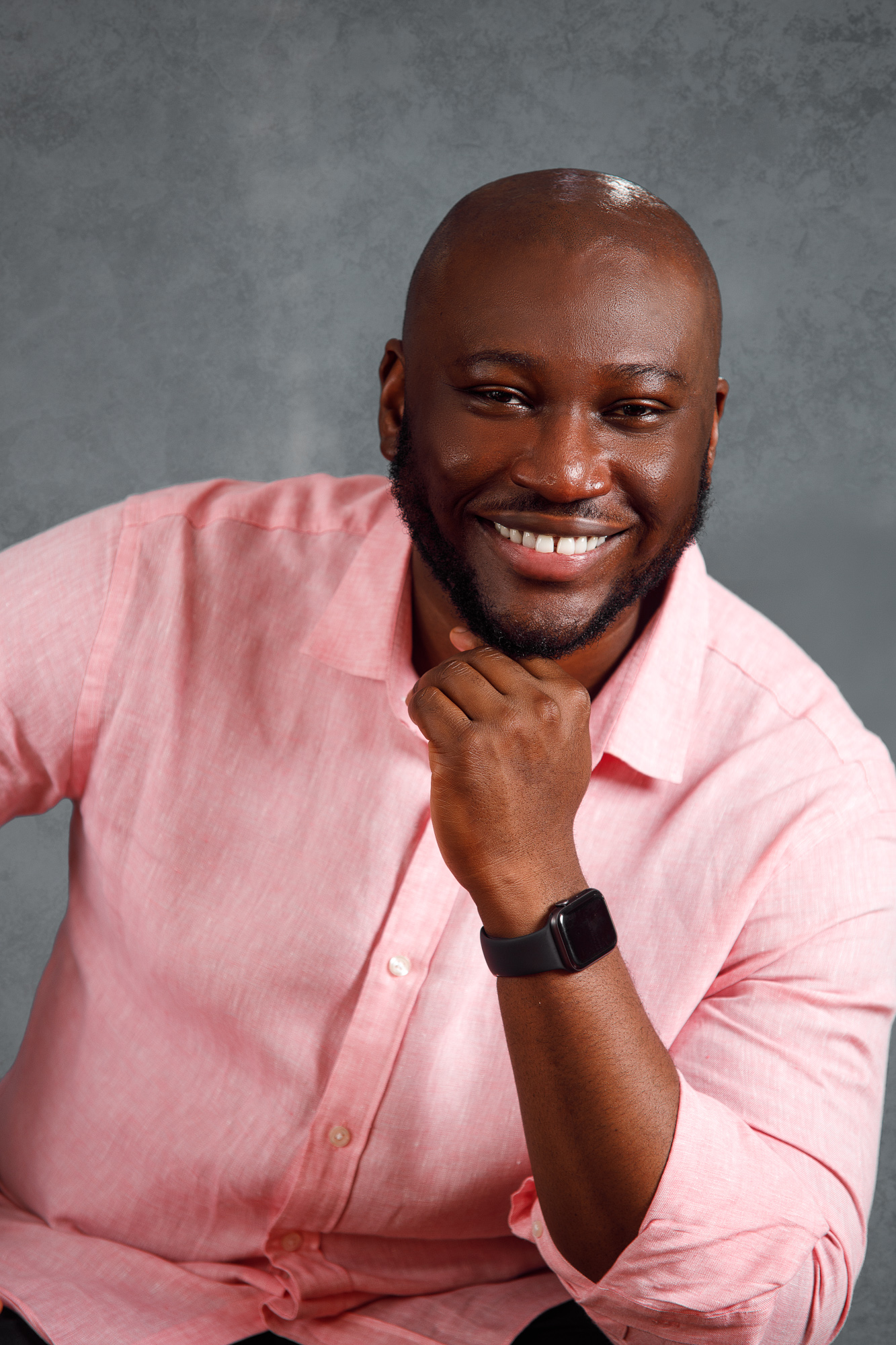
Born and raised in the Nigerian port city of Calabar,
Abasi Ene-Obong remembers the exact moment that
changed his life’s direction. Sitting in an
introductory genetics class at medical school, in
2003, he heard the professor say that African genetic
samples comprised less than 3% of health data bases in
the world,
creating
a stunning vacuum in its ability to detect diseases
and develop effective treatments for hundreds of
millions of people.
Ene-Obong ditched his plan to become a doctor, and
instead left for London, and later Los Angeles, to
study genetics, finally earning a Master’s degree in
business focusing on the bioscience industry, at the
Keck Graduate School in California, and a Ph.D. in
cancer biology at the University of London.
With that, he launched 54gene
in 2019—named for the 54 countries in Africa—with the
mission to right the sharp racial imbalance in global
health data. Headquartered in Lagos, Nigeria, and
Washington, D.C., the startup was on TIME’s 2019 list
of best health innovations.
Three years on, Ene-Obong, 37, says every part of the
mission has proved hugely challenging, from raising
venture-captial funds to explaining to Big Pharma
companies what 54gene is trying to do.
TIME met Ene-Obong in Paris in June to discuss how
his company intends to
grow its business, make money and the process of
winning over investors—and the health problems at
stake.
This interview has been condensed and edited for
clarity.
(For coverage of the future of work, visit
TIME.com/charter
and sign up for
the free Charter newsletter.)
What is the major problem you are trying to solve?
This is a problem that affects everyone across the
world. We're all faced with new diseases, and even
current diseases, like cancers and cardiovascular
diseases, and there's a need to find cures, with
advancements in bio-computing, and AI and
genomics.
Because of the maturity of various tech verticals,
where most groups are beginning to look at genetics,
that could mean better diagnostics, and safer and more
effective drugs for diseases. In order for us to
understand human biology, we can't just look at one
group of people and assume that group represents all
people.
Right now most of the genetic [data in] databases
across the world is Caucasian.
I see 54Gene’s website says only 3% of the world’s
genetic databases come from African genes.
Actually it’s less than 3%, That is something my
company is trying to solve.
Africans represent the most diverse population on
Earth, and what that means from a genetic standpoint
is that lots of what we call variants that we need to
understand, what we're looking for is just
differences.
We’re not only talking between Africa and Caucasian,
but also between [for example] Nigerians and
Cameroonians. Nigeria has more than 300
ethno-linguistic groups. I am mixed, Efik and Igbo,
from Calabar, which was one of the biggest exporters
of slaves.
Is this vacuum the fault of Big Pharma? Or is it
African countries and governments that have simply not
collected genetic data?
It's everybody's fault. It's both the fault of
governments not prioritizing this, in many cases, not
even understanding the need for this. And it's also
the fault of Big Pharma.
Big Pharma has been opportunistic. They've gone to
where the data exists. It has not really been their
job to produce the data. But because of their role in
the ecosystem, they could be a voice to really advance
this part of medicine.
I would put quite a lot of the fault on the lack of
research and development in Africa. I want to make
sure we are being honest with ourselves. If we as
Africans take the initiative and the leadership in
this, then others will come to the table.
There was a lot of talk during the pandemic about
vaccine nationalism and about African governments being
cut out of any fair distribution. Is this part of the
same problem—that Western pharmaceutical companies are
basically rapacious?
I'm not an apologist for the West, but I think we
need to take more ownership and more action. You don't
have to match the West and put $2 billion into COVID,
but you can put a portion of your budget. What we're
seeing is that they [African governments]
were not even putting in that.
Most of health care in Africa has typically been
funded by international donors. So African governments
have not owned their own health care. They have lots
of international donors who put in the money and
dictate the agenda for how funds should be used. And
so after decades and decades of that type of behavior,
they have to unlearn, and practice healthcare in the
way it should be practiced. Now we're beginning to see
that in certain governments.
What’s 54gene’s business model? And how do you partner
with Big Pharma and other entities?
Our goal is not so much to create the data and have
anybody buy it. That would not be responsible. We have
to fix systemic issues, where people come in [to
Africa] to pay for samples, take the samples to their
countries, all outside Africa, do the research and
development outside, make the drugs, and they never
come back to Africa.
Right now, it takes 10 to 20 years for a drug
launched in the U.S., or France, to come to Africa.
Our business model is one that I believe is more
inclusive and sustainable, and has Africans in mind.
Rather than building a data set and sending it out, we
are doing the R&D work, sometimes in partnership
with pharma companies, the goal being that we will
develop drugs or our data will be used
to improve diagnostics for Africans and
non-Africans.
How are your discussions going with big pharmaceutical
companies?
We do have works in progress with a few
pharmaceutical companies, both U.S. and
European.
When
you talk to CEOs, is the work you’re doing something
they understand, or is it a jump for them?
We have some that understand the need to do this type
of work in Africa, such as doing the [genetic]
sequencing on the continent, with which we've built a
sequence in the lab so that we don't have to send them
abroad, or doing the clinical trials in Africa such
that African patients can also get access to
innovative drugs very early on.
So we see that some of these companies get it. A
majority of them do not get it, because the majority
of them are still looking at old business models. They
want access to biological samples, to do the research
and make whatever decisions the boardroom decides.
Do you see health crises, or disease, where the outcome
would have been different if Africa had this kind of
genetic data?
With COVID-19, we know we should have very robust
surveillance systems. But in order to do that, you
need to have the technical capability and
infrastructure. Africa lacks quite a lot of that.
Again, that is one of the things we are solving. But
you know, there are 54 countries and 1.4 billion
people. We could do much, much better. And yes, it
could help prevent some infectious diseases.
But people are not yet calling out the rise in
non-infectious diseases, and we are seeing that in
hospitals: Rises in cancer cases and cardiovascular
disease cases.
Most public funders have prioritized infectious
diseases like HIV, tuberculosis, malaria. That’s where
all the money has gone to. That has led to a lack of
development in this non-infectious disease care
management.
I don’t think this is really understood. Are you saying
that basically, to treat diseases like cancer, heart
disease and diabetes, Africans might require treatment
specific to them?
In a lot of cancers, with the mutational drivers,
most of our understanding is based on studies done in
purely Caucasian populations. There was a study a year ago
at the University of Chicago where they looked at
breast cancers amongst Yoruba women, which found there
was a different gene mutation causing a number of
cases. The women got more severe breast cancer in
their 40s. The drugs we've been using to treat breast
cancer, and the diagnosis, have not really looked for
this mutation.
(For coverage of the future of work, visit
TIME.com/charter
and sign up for
the free Charter newsletter.)
How hard has it been for you to raise funds for 54gene?
We raise funds mostly through venture capital
funding, where we give some equity, for investments.
As of last year, we had raised $45 million. We are
attracting very good investors.
I see the company becoming a major player in the
health tech space, measured by impact, rather than the
monetary value. The work we are doing is going to
improve health outcomes in various countries in
Africa, covering hundreds of millions of lives,
potentially. Globally, it's going to help inform how
diseases are looked at, how new drugs are
developed.
What is the potential impact on Black Americans?
The work is going to impact all people of African
origin, whether they are in Africa, France, the U.K.,
or the U.S., Brazil, or the Caribbeans. Many of them
came from West Africa. We know Nigeria contributed
about 25% during the slave trade. And we still see
more Nigerians leaving. As the world gets more
diverse, this is only going to get even more
important.
And then, of course, Nigeria will soon have more people
than the U.S.
Yes. And Africa will soon have more people than
Asia.
Big Pharma is notoriously focused on its bottom line.
What do you say when they ask, ‘what is in it for us?’
Quite a few things are in it for them. One is it's
going to improve the pipeline of new products, not
just products sold in Africa, but also globally. We're
not saying that your entire focus should be Africa. We
are saying you can include Africa in your focus, and
it could also impact your bottom line significantly.
I'll give you an example. There is a drug used to
treat bad cholesterol. A lot of the insight for the
work came from Africans, because the drug targets a
rare mutation, that is more common in African
populations. The discovery came from African
populations in the U.S., actually.
At what moment did you suddenly think to yourself ‘this
is what I should do?’
A lot of it was serendipity. I was studying medicine
as an undergraduate in Nigeria. I saw how genetics
held the possibility of finding cures for rare
diseases like Huntington's and sickle cell disease. I
got very interested at that age in doing genetics. By
the time I was doing my Ph.D., I realized that I
wanted to be running a company that was global, but
also provided a platform for Africans to contribute
globally to research and healthcare.
In 2013, I moved to LA. I worked in the U.S. as a
management consultant for pharmaceutical and biotech
companies. The first sets of data coming out showed
how diverse African populations were, and the lack of
that data. So I knew that with my educational
background and my work experience, and being born in
Nigeria, that I could solve some of this problem. And
so I went back to start it.
Why does 54gene have a Washington base? What’s the
purpose of that?
It’s a global company. There are a lot of people,
Africans and non-Africans, who want to contribute to
this mission because it affects all of us as human
beings. Right now we have over 100 people in Nigeria,
and nearly 30 in the U.S.
We’re sitting here at VivaTech, a tech conference in
Paris, and there’s been a lot of talk for a long time
about the tech industry being overwhelmingly white. How
has your experience been?
People solve what they know. It is the same for
investors: Investors invest in what they know, and
what they connect to. When you don't have a diverse
group of people in key decision-making positions in
the tech industry, you are not going to get them to
invest in Black businesses, or businesses from diverse
communities, because they want to put their money in
what they understand.
We need to have more diversity in the VC [venture
capitalist] offices. Investments are emotional, you
have to have an emotional connection.
I’m assuming when you are dealing with VCs it is mostly
white men, correct?
Yes. I have reason to believe investment is
emotional, from my own personal experience. It could
mean I am connected to the problem, or connected to
the person who is solving the problem.
One way we solve that problem is having people who
are of diverse ethnic groups and experiences. When I
talk to U.S. or U.K. or European VCs about the market
in Africa and how it's growing, many of them have
never been to Africa. Many of them still have the same
pictures that you see on TV, of somebody begging, of
donating to charity. One investor meeting I had, he
started mentioning what he does for charities. As I
started talking, he was interjecting all the time.
Some of his colleagues were getting uncomfortable. At
some point I said, I didn't come here to be insulted.
I would rather not take your money. He had to take a
step back and his colleagues apologized.
So, for an investor like that, there is no sense that
maybe there could be a return on the investment?
When he stopped talking and started listening, he
ended up saying, ‘oh this is this is actually cool.’
But that was an experience I do not want to repeat.
Share The Leadership Brief by clicking here.
|